
Activating Memory Through Archival Footage: Proustian echoes and the philosophical implications of reclaiming the past
Memories are hunting horns whose sound dies in the breeze.
—Guillaume Apollinaire, Cors de chasse.
Introduction
In contemporary experimental cinema, archival footage has emerged as a medium used for reimagining history, constructing narratives that transcend temporal boundaries, and redefining the interplay between the past and the present.
This essay investigates how archival footage engages with themes of memory, loss, and remembrance, exploring how ordinary, private film reels are transformed into evocative stories that resonate with universal significance. The aesthetic and philosophical dimensions of repurposing archival material will be examined to reveal how these images do more than preserve the past, activating their potential to inform, critique, and reimagine the present.
Drawing on Marcel Proust’s concept of involuntary memory, the archive will be discussed as a site where forgotten or hidden experiences are reanimated through sensory and emotional resonance through the analysis of three case studies: Yaël André’s When I Will Be a Dictator (Quand je serai dictateur, 2014), Alina Marazzi’s For One More Hour with You (Un’ora sola ti vorrei, 2002), and Nuria Giménez’s My Mexican Bretzel (2019). Each film uses archival material to challenge conventional narratives and offer new insights into the emotional and historical complexity of human experience.
The goal will be to demonstrate how the use of private archival footage invites a reconsideration of memory as a dynamic, evolving force, allowing for a deeper understanding of the ways in which personal and collective histories intersect and shape one another. Old film reels, recontextualized within new narratives, function as triggers for cultural and personal memory. When an audience is presented with an image from the past, the footage evokes not only the historical context of its origin but also the viewer’s subjective, emotional associations with a shared cultural imaginary. It becomes, in effect, a cinematic madeleine, collapsing the distance between history and the present moment. What was once private and ephemeral is reimagined as a collective site of exploration, embodying the fragmented yet interconnected strands of individual and cultural histories.
The Proustian model of memory and cinema
As Pam Cook notes, towards the end of the twentieth century, there was a “growing preoccupation with memory and nostalgia” (Cook, 2005:1). This cultural and intellectual trend has led to an expansion of multimedia discourses aimed to reshape how history is traditionally constructed and understood, introducing alternative modes of engagement that challenge linear narratives and fixed interpretations. Cook suggests that this phenomenon has profound implications for historical inquiry, particularly as it intersects with cinema. In fact, in the last few decades of the 20th century, archival footage or found footage has been increasingly employed in experimental cinema as a means of questioning and interrogating the past.
By reassembling and reconfiguring historical materials and imbuing them with new meanings and interpretations that challenge their original intent, filmmakers disrupt the presumed objectivity of archival records, foregrounding the subjective, constructed, and often contested nature of historical memory. Such an approach could be valuable to question dominant narratives and shed light on forgotten or silenced voices, urging us to reconsider the archive as a space not of static preservation but of dynamic, ongoing re-interpretation.
Archival footage can be broadly divided into two categories: public reels, produced by official state cinema companies, television broadcasts, and institutional collections; and private material, including 8mm, Super 8, or 16mm reels created by individuals or families for personal use. While public footage carries the features of formal historical authority, private footage is imbued with an intimate immediacy—that of the personal and domestic spheres of life—since it was usually intended to be watched only by close relatives and friends.
In the last few decades, private footage has been increasingly employed in films confronting themes of memory, loss, and remembrance. Acting as archeologists, filmmakers working with this material excavate images from obscurity and transfigure them into something simultaneously familiar and unfamiliar. The mundane details of private life—a child’s birthday party, a family outing, a holiday gathering—assume a universal significance. In this sense, we can say old film reels carry with them a form of magical thinking, as they possess the power to transcend time, transforming static images into dynamic portals through which we can revisit forgotten moments, reshape histories, and reimagine identities.
These relics of the past enable to not only preserve memory but to reinterpret it, allowing us to engage with the subjects portrayed on celluloid as living entities that speak across generations. The act of viewing takes on a supernatural quality, where the boundaries between past and present are blurred, offering a glimpse into what has been, what could have been, and what might yet be. In this sense, the act of working with archival footage mirrors the Proustian notion of memory as both a retrieval and a re-creation of the past. À la recherche du temps perdu (In Search of Lost Time, 1913) is a novel that explores themes of memory, time, and the nature of human experience. Spanning seven volumes, it is both an intricate narrative and a profound philosophical inquiry into the workings of consciousness and the passage of time.
Proust’s seminal work illuminates a central duality in the human experience of memory: the contrast between voluntary and involuntary recollection. Voluntary memory is a deliberate act of recalling the past, often stripped of its emotional essence and reduced to mere facts. Involuntary memory, however, is a spontaneous, almost mystical experience, generally triggered by sensory stimuli, that collapses time and allows the past to manifest vividly in the present. A sip of tea infused with the flavor of a madeleine becomes a portal to childhood, dissolving the barriers between then and now. This act of remembrance becomes a gateway to reconstructing lost time, transforming fragmented memories into an enduring artistic vision. I posit family found footage has the same quality, in the sense that it activates involuntary memory.
These relics of the past enable to not only preserve memory but to reinterpret it, allowing us to engage with the subjects portrayed on celluloid as living entities that speak across generations
Filmmakers such as Yaël André, Alina Marazzi, and Nuria Giménez have engaged with found or inherited film reels to deconstruct the intimate narratives embedded within them. They use private footage to generate autobiographical essay films wherein the personal becomes an entry point for broader reflections on history, memory, and loss. By drawing attention to the gaps, omissions, and erasures within private and personal records, this specific type of found footage reveals how memory can be mobilized to confront—and overcome—personal or historical trauma, serving as a medium for profound introspection and emotional reconciliation.
Reimagining the past through fantasy: When I Will Be a Dictator
For Proust, memory is not a mechanical act of recall but a transformative event, an existential reawakening in which the past bursts into the present through a fusion of sensory, emotional, and temporal dimensions. This idea is represented by the metaphor of a madeleine, which, when dipped in tea, creates a taste that collapses chronological time for the one who experiences these sensations, bringing back to life a lost world with all its nostalgia.
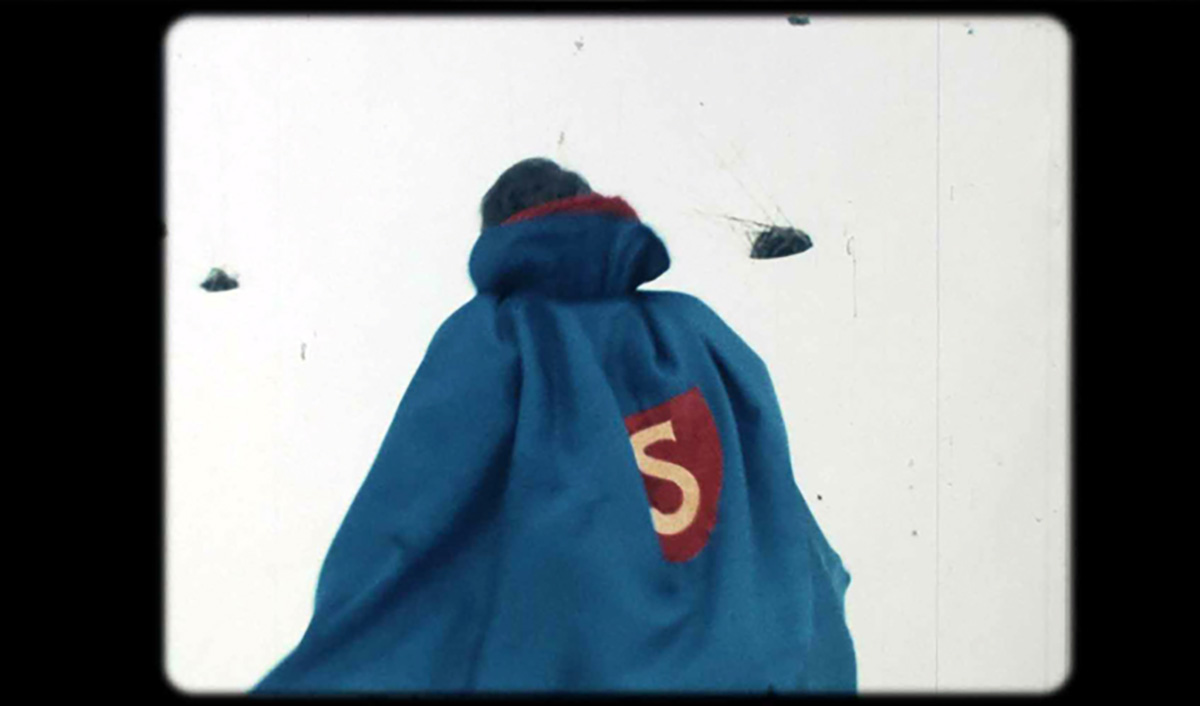
In a similar fashion, Yaël André’s When I Will Be a Dictator exemplifies how found footage can transform the everyday into a surreal and poetic tapestry of emotions and feelings. The film is based on an eclectic collection of Super 8 footage from amateur home movies found by the director in flea markets and junkyards. André begins by recounting the true story of her friend George’s descent into madness and suicide, only to then invent alternative worlds in which her friend is not dead but living different lives: being an accountant, an exemplary mother, a murderer, an adventurer, God.
One scene that shows a group of young girls performing classical ballet offers a depiction of discipline and aspiration; another depicts a cowboy at a rodeo, evoking the mythic allure of the American West filtered through a domestic lens. This playfulness contrasts with the quieter, more intimate footage of family gatherings. In these scenes, faces light up with laughter, gestures of affection are exchanged, and unposed moments reveal the unspoken bonds between generations.
In one uncanny sequence, André overdubs a conversation between partygoers, transforming it into a commentary on her film’s central themes. Later, she manipulates the borrowed footage, running it in loops or even in reverse, in search of fleeting moments of joy or an attempt to undo tragedies that can only be rewritten within the realms of her imagination, as if the past of strangers could become the alternate present of the dead. Through the footage, the director projects her own unresolved feelings of guilt, grief, and longing, recalling Proust’s approach to memory:
When from a long-distant past nothing subsists, after the people are dead, after the things are broken and scattered, still, alone, more fragile but with more vitality, more unsubstantial, more persistent, more faithful, the smell and taste of things remain poised a long time, like souls, ready to remind us, waiting and hoping for their moment, amid the ruins of all the rest; and bear unfaltering, in the tiny and almost impalpable drop of their essence, the vast structure of recollection (Proust, 1992:48).
In this vast structure of recollection, with its multifaceted features and hued implications, André’s use of archival footage brings together fragments of lost histories resurfacing to haunt the present with renewed force and unforeseen meaning. Just as Proust’s madeleine bridges the gap between the lost and the living, so too does archival footage open a space where history is neither static nor resolved but alive and perpetually in flux, open to reinterpretation and new associations.
The archival footage functions as a kind of mirror stage, a concept central to Jacques Lacan’s psychoanalysis. Much like the infant recognizing its reflection as both self and other, André’s reuse of the images reveals the fragmented self-confronting its reflection in the archival material. The eclectic and unconnected nature of the footage underscores this sense of fragmentation, yet André reassembles it into a narrative that gestures toward coherence. In doing so, the film suggests that identity and memory are themselves constructed from disjointed pieces, with the archive serving as a site of both self-recognition and disavowal.
Furthermore, André’s manipulation of the archive reorganizes the traumatic event of George’s death within the symbolic order, rendering it intelligible and thus more bearable. The introduction of imagined worlds in which George survives and thrives disrupts the finality of death, offering a symbolic reconstruction of loss. This act of narrative reinvention is not merely a creative exercise but an act of agency. By overlaying the archival footage with fictional narratives, André resists the static nature of grief, transforming the archive into a dynamic space for meaning-making and emotional reconciliation.
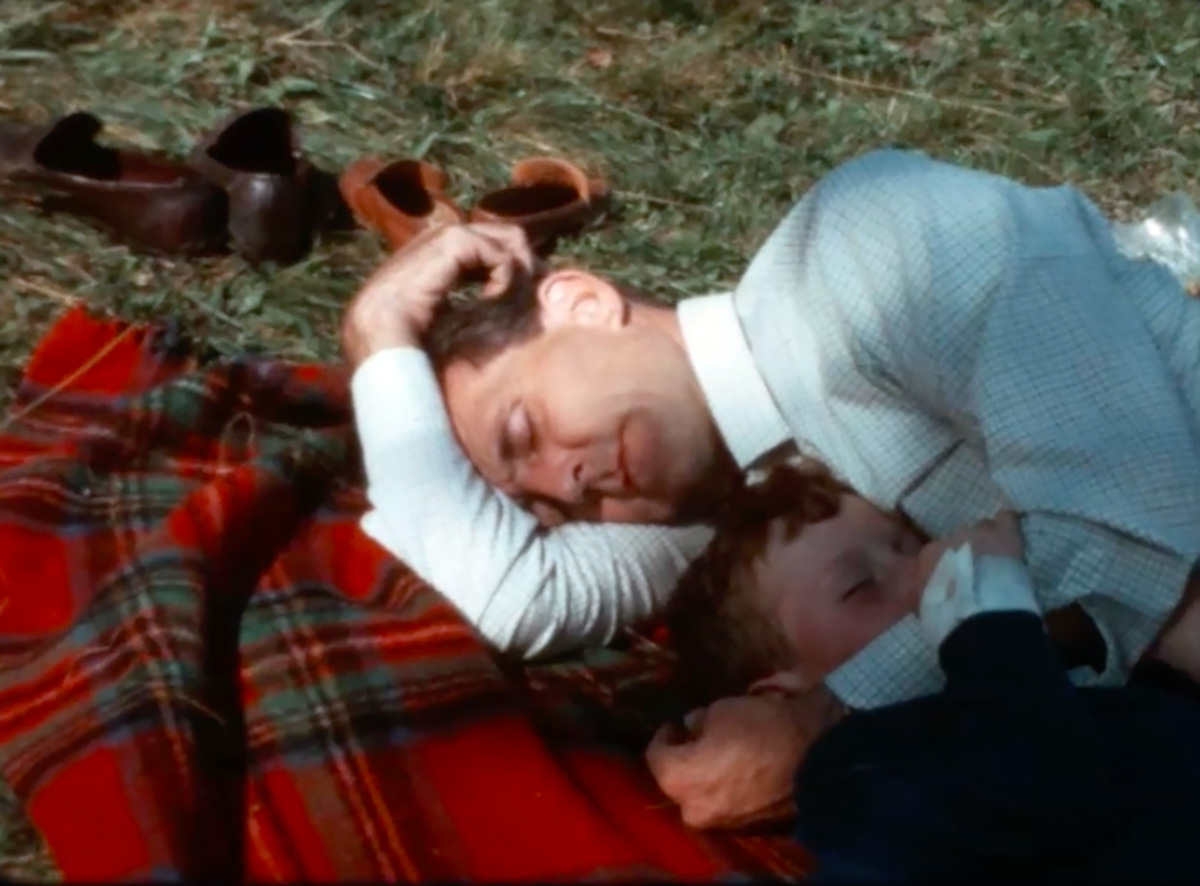
The found footage in the film serves as a surrogate for the lost object—George—and allows André to navigate her grief by creating new narratives around his memory. These invented worlds, where death is circumvented and new possibilities emerge, act as a form of symbolic substitution. The archive becomes a therapeutic space, enabling André to reimagine not only George’s fate but also her own identity in relation to his loss. This act of reimagining aligns with the Freudian concept of sublimation, whereby the energy of grief is redirected into creative and socially meaningful expressions.
By re-inscribing the past with new emotional and aesthetic dimensions, When I Will Be a Dictator reminds us that history is not a static repository but a living, breathing entity—a site of endless reinterpretation and resonance.
Mourning and the fragmentation of memory: For One More Hour with You
Alina Marazzi’s For One More Hour with You is a cinematic exploration of personal archives serving as a meditation on the fragile and elusive nature of remembrance. By weaving together fragments of amateur home movies shot by her grandfather, the director reconstructs the life—and loss—of her mother, Liseli Hoepli Marazzi, who died by suicide when Alina was only a child. Exploring the unpredictable quality of memory, the film sheds light on the way in which recollections, both meaningful and trivial, can emerge unexpectedly. As Proust observed recalling a particular meeting with Mme. Swann, memories are fleeting and constantly changing because they are connected to a specific combination of temporal and spatial features:
The reality I had known no longer existed. That Mme. Swann did not arrive exactly the same at the same moment was enough to make the avenue different. The places we have known do not belong solely to the world of space in which we situate them for our greater convenience. They were only a thin slice among contiguous impressions that formed our life at that time; the memory of a certain image is only regret for a certain moment; and houses, roads, avenues are as fleeting, alas, as the years (Proust, 2003:676).
Along the same lines, Marazzi’s film delves into the fragility and elusiveness of memory through the juxtaposition of different moments lived in specific locations at a specific time. One sequence shows Liseli on holiday with her fiancé, surrounded by friends. The grainy footage, saturated with sunlight, presents a picture of carefree happiness. The couple’s shared glances and playful gestures convey an air of intimacy, while their interactions with friends recalls a sense of belonging and celebration. This almost-idyllic portrait is later shattered by starkly contrasting scenes set in a Swiss clinic, where the mother seeks treatment for her depression. The camera, now bearing the weight of unspoken pain, captures a woman enveloped in silence. Her face, once animated with laughter, appears subdued, her movements restrained. The sterile surroundings of the clinic, coupled with her detached demeanor, contrast with the earlier footage, underscoring the dissonance between outward appearances and inner turmoil. These cinematic juxtapositions reflect the dualities of life and the struggle to reconcile cherished memories with the reality of suffering.
Marazzi’s use of a voiceover narration, pieced together from her mother’s diaries and letters, deepens the interplay between presence and absence. The voice speaking to the viewers becomes a ghostly echo, underscoring memory’s inherent selectivity and incompleteness, shaped as profoundly by erasure as by recollection. In this way, For One More Hour with You becomes an act of reconstructive imagination, where the gaps in archival footage and personal memory are brought together by the director’s mother’s inner world. The result is not a factual biography but an emotional and sensorial one. The amateur home movies function as cinematic madeleines, embodying the sensory triggers that awaken memories buried beneath the layers of time. The grainy textures and intimate portrayals of daily life invite the viewer to partake in the filmmaker’s act of remembrance.
In this sense, film, like memory, is both a preservation and a distortion of reality. The archival footage bears the marks of time’s passage—scratches, fades, and missing frames—emphasizing the impossibility of freezing time and the inevitability of loss. Yet, these imperfections are what make the footage so evocative, much like the gaps and silences in memory that Proust so eloquently describes.
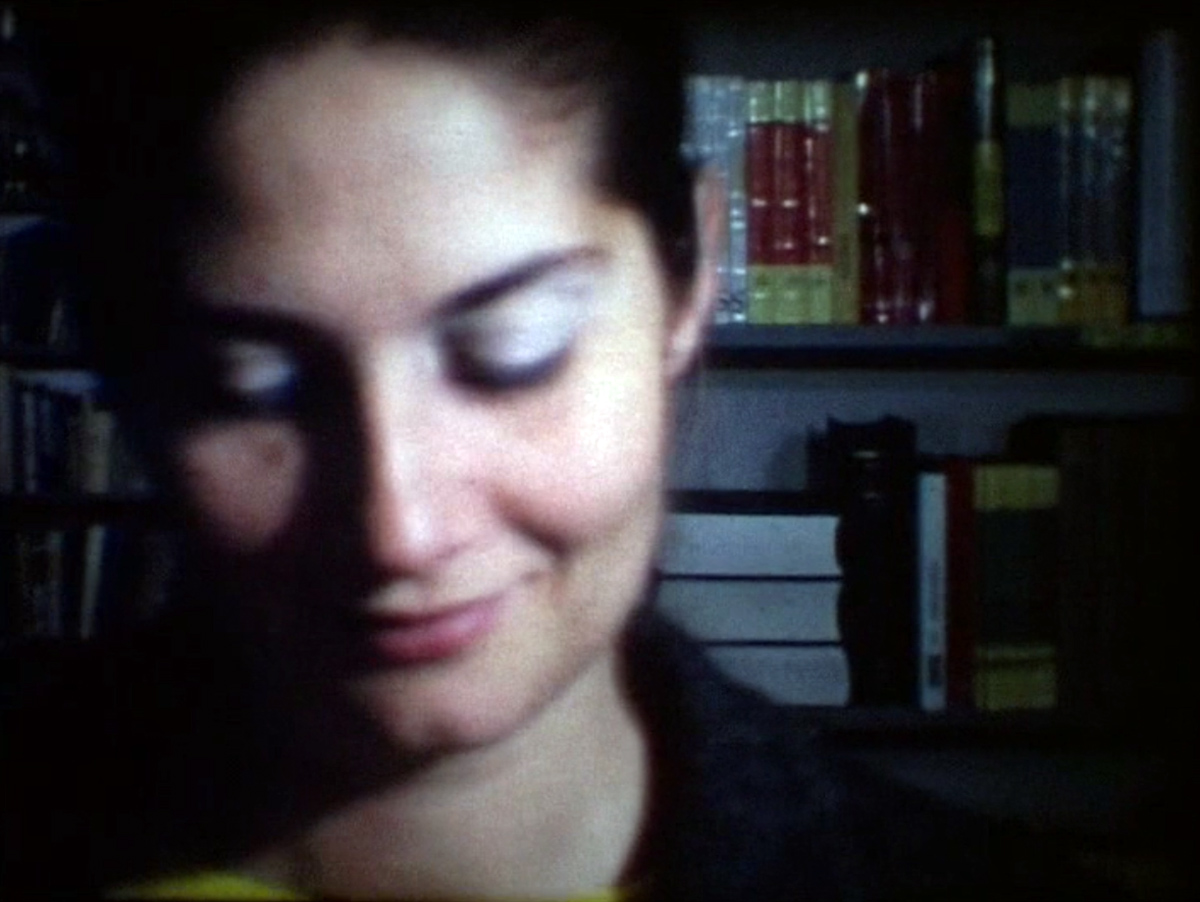
Ultimately, Marazzi’s film serves as a cinematic meditation on the enduring quest to reconcile the past with the present. Her filmic journey shows us how the act of remembering is both an artistic and a deeply human endeavor, one that reveals as much about the present self as it does about the past. In recovering fragments of her mother’s life, the director not only mourns what has been lost but also affirms the transformative power of memory to connect us across time, offering glimpses of a world that is gone yet somehow still alive within us.
The archive as fictional autobiography: My Mexican Bretzel
The re-use of archival footage is often characterized by a self-reflexive approach that blends personal reflections with broader historical or cultural inquiries. American anthropologist Jay Ruby describes reflexivity in this context as not merely self-awareness but “be[ing] sufficiently self-aware to know what aspects of self are necessary to reveal” (Ruby, 1977:4).
This process not only destabilizes the archive’s authority as a neutral repository of truth but also highlights the active role of the filmmaker as a mediator of meaning. Reflexivity thus becomes a method of both critique and creation, enabling the archive to serve as a site of imaginative reconstruction rather than mere documentation. An interesting example of this approach is Nuria Giménez’s My Mexican Bretzel, a film which employs archival footage shot by the director’s grandfather to construct the fictional life of Vivian Barrett, a seemingly happy woman married to her husband León. The images are accompanied by a voiceover reading diary entries told from Vivian’s perspective.
The film initially introduces us to idyllic images of the couple’s youthful romance: picturesque landscapes, leisurely moments, and gestures of affection. However, as time progresses, the imagery begins to reveal moments of alienation, captured in León’s distant stares or Vivian’s quiet introspection. This evolution mirrors the narrative presented in the fictional diary entries, which suggest a deepening crisis in the couple’s relationship. The dissonance between the seemingly perfect images and the unfolding tension in the written narrative forces the viewer to question the reliability of what they are seeing and hearing.
Sound plays a pivotal role in the film’s narrative. León’s deafness, a result of a plane accident during his time in the military, shapes the couple’s dynamic and the film’s sonic landscape. Several long sequences are completely silent, metaphorically underscoring the distance between the two partners, as well as the emotional void that grows within their relationship. This acoustic minimalism emphasizes the disconnection and isolation felt by the couple, aligning the audience with León’s sensory deprivation while amplifying the poignancy of Vivian’s internal monologue.
When sound does emerge, it punctuates key moments and noises from the environments where actions take place, stressing how the two main characters reframe their lives through sensory details. Through Vivian’s voice and León’s silence, the film not only crafts an autobiographical fiction but also meditates on the subjectivity of human relationships and the elusiveness of truth, echoing Proust’s concept of memory as an act of imaginative reconstruction. For the French writer, memory is never static or precise; rather, it is fluid, shaped by the subjective lens of the present moment. Sensory stimuli evoke vivid recollections of the past, which is never truly lost; it is stored within the fabric of the present, accessible through unexpected triggers.
Giménez’s film illustrates how memory operates not as a faithful transcription of events but as a tapestry of emotions and desires. Vivian’s story, though fictional, captures a universal longing for connection and meaning. The archival footage, once bound to the specifics of the filmmaker’s grandfather’s life, is reframed as an artifact of universal emotional experiences. It evokes a sense of temporal fluidity, where the boundaries between past and present blur, much like Proust’s collapsing of linear time.
But when a past sensation resurfaces, it does so unbidden, carrying with it the freshness of the moment in which it was first felt, defying the erosion of time. This involuntary memory, released by the taste of a madeleine or the feel of uneven paving stones, awakens not a mere recollection but a profound and living experience. Memory, thus, is not archival but organic, alive in its ability to recreate the past within the present. (Proust, 1992:64).
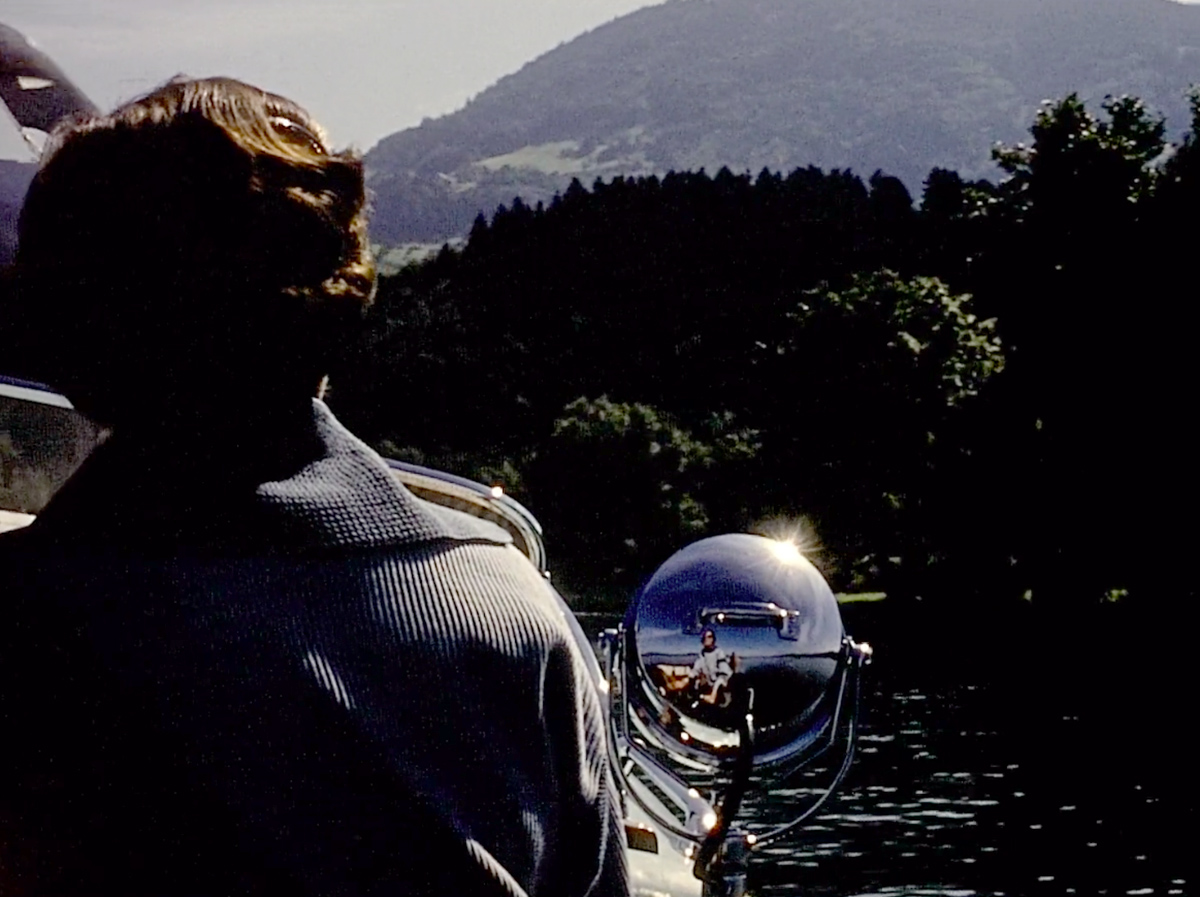
The use of found footage in My Mexican Bretzel transforms memory into a tactile and immersive process, inviting viewers to inhabit the in-between space where the real transforms into the fabricated, and vice versa. The film challenges the viewer to consider memory as inherently unstable—constructed as much by absence and longing as by what is materially preserved. Found footage acts as a material surrogate for what is lost, rendering the past achingly present. The found footage, in its imperfections and fragmentary form, mirrors the human psyche’s own incomplete and selective processes, affirming that memory is less a mirror of the past than a vessel for its ongoing negotiation with the present.
Memory’s return in found footage cinema
Over the past decades, several scholars have analyzed how memory is a construct forged in time, perceived in different ways through different temporal and cultural frameworks. Pierre Nora introduced the concept of lieux de mémoire (sites of memory), which underscores the shift from collective, lived memory to memory preserved through material and symbolic markers.1 Jan Assmann refined this theory by distinguishing between “communicative memory” (short-term, everyday recollections) and “cultural memory” (long-term, institutionalized narratives), offering insight into how societies structure their recollections across time.2 Philosophers such as Paul Ricoeur, Jacques Derrida, and Andreas Huyssen have expanded this analysis by exploring memory’s philosophical and ethical dimensions, delving into how it functions not only as a tool for identity and continuity but also as a site of power, negotiation, and transformation.3
These analyses emerge from a broader shift in the concept of history that began in the 18th century, when collective memory, once understood as an organic and seamless repository embedded in familial and national traditions, began to fracture under the pressures of modernity. Memory was increasingly recognized as a more complex and individualized construct, shaped not only by shared traditions but also by personal experiences. This reconceptualization deepened and gained complexity over the course of the 20th century, influencing creative fields such as literature and cinema. In this regard, by repurposing home movies, personal archives, and ephemeral recordings, filmmakers engage directly with memory’s fragmented and subjective nature. Found footage cinema becomes a site where multiple temporalities and memories converge. It destabilizes the authority of a singular historical narrative, reflecting instead the multifaceted, interpretative essence of memory in the modern era, grappling with the perceived loss of cultural continuity by reconstructing meaning through the intimate and the ordinary. Found footage films, particularly when crafted from home movies, epitomize the fragmented and subjective nature of memory. Quoting again Proust:
[…] when from a long-distant past nothing subsists, after the people are dead, after the things are broken and scattered, taste and smell alone, more fragile but more enduring, more unsubstantial, more persistent, more faithful, remain poised a long time, like souls, remembering, waiting, hoping, amid the ruins of all the rest; and bear unflinchingly, in the tiny and almost impalpable drop of their essence, the vast structure of recollection (Proust, 1992:60).
The aesthetic imperfections and banalities of home movies resist grand historical narratives, instead celebrating the fleeting, the ephemeral, and the seemingly insignificant. As Proust demonstrated in his exploration of involuntary memory, it is often the overlooked details of life that hold the most profound emotional resonance.
Found footage films, particularly when crafted from home movies, epitomize the fragmented and subjective nature of memory
By focusing on the ephemeral and the seemingly insignificant, home movies evoke a sense of nostalgia and longing that transcends the factual or the objective. The mundane details of everyday lives—the flicker of sunlight on a child’s face, the sight of freshly baked bread wafting through an open window, or the rhythmic tapping of rain against the pavement—generate a web of associations, transforming personal memories into universal reflections on time’s elusive passage, revealing memory as an ever-shifting construct rather than a fixed archive.
Home movies, much like Proust’s narrative, suggest that memory, far from being a mere reflection of the past, is an active, affective process through which the mundane is imbued with meaning, and the transient is rendered eternal. Found footage films made out of other films, in this case, amateur films, mirrors the human need to anchor fleeting moments of life within a larger, albeit subjective, sense of continuity, challenging the very notion of an objective historical truth.
Archival footage as myth and memory
As scholar Michael Renov observes in Theorizing Documentary, nonfiction, even in its ostensibly objective ambitions, has long grappled with the necessity of creative intervention.4 Home movies, created to document personal lives acquire fictional qualities when appropriated into experimental narratives. Filmmakers assume the role of both curator and creator, navigating a space that merges the intimate subjectivity of the original footage with their own aesthetic vision.
This tendency manifests itself as a quasi-mythologizing process, wherein the raw, unrefined images of ordinary individuals, captured in the now-worn reels of old films, are transmuted into almost mythical figures. The very act of cinematography, with its inherent capacity for transformation, becomes an alchemical process in which the mundanity of daily life is reframed and reinterpreted as something far more compelling and profound. What was once an unremarkable moment—perhaps a casual glance, a fleeting gesture, or the humdrum of ordinary existence—becomes, through the power of cinematic language, a frame in a larger, more resonant narrative. Through this process, the people captured in old film reels cease to be mere subjects; they are elevated, their stories amplified into archetypal narratives that transcend their immediate context.
At the heart of this mythologizing phenomenon lies the strategic use of voiceover narration. This device operates as a textual framework that imbues the archival footage with layers of interpretive depth. What was once a silent, unspoken image is now recontextualized, reframed through the lens of a storyteller’s voice. The voiceover functions as a mediation between the viewer and the imagery, guiding the audience’s understanding and directing their emotional responses. It imposes a kind of meaning upon the footage, subtly suggesting that these individuals are more than they appear onscreen, inviting the viewer to see their actions as part of a broader, more universal story.
This interpretive process is further amplified by the accompaniment of a carefully selected soundtrack, shaping the emotional and psychological contours of the narrative. It may evoke nostalgia, drawing on familiar tunes or sonic textures that summon a collective memory of a past that may never have been personally experienced but feels hauntingly familiar nonetheless. Alternatively, the soundtrack may heighten the dramatic tension, imbuing seemingly mundane scenes with an undercurrent of suspense or significance. Through the interplay of music and sound, the emotional resonance of the footage is deepened, creating an atmosphere that guides the viewer through moments of melancholy, joy, or even apprehension. In this way, the soundtrack becomes an essential counterpart to the voiceover, enhancing its impact and deepening the viewer’s emotional investment in the narrative.
The nostalgic impulse generated through editing is less about recovering an objective past and more about recreating the emotional textures of that past. In this regard, the creative interventions in found footage filmmaking—voiceover narration, music, editing—can be seen as attempts to conjure a sense of time remembered, time felt.
For Proust, the act of recollection is inherently transformative, imbued with a longing not merely to retrieve the past as it was but to elevate it into something more profound and enduring. He writes:
The reality that I had known no longer existed. The places we have known do not belong only to the world of space in which we situate them for our greater convenience. They were only a thin slice among contiguous impressions which formed our life at that time; the memory of a certain image is but regret for a certain moment; and houses, roads, avenues are as fleeting, alas, as the years (Proust, 1992:49).
This passage suggests that the act of remembering involves a process of re-invention shaped by emotional resonance. Along the same line, archival filmmaking echoes the longing for a better version of the past. In this regard, the transformation of the original footage into new narratives is not an act of deception but an artistic and emotional action, addressing a collective yearning to reconstruct bygone moments in a way that aligns with the contemporary need to understand what and who came before us. By mythologizing archival footage, filmmakers not only provide a sense of closure but also articulate a shared yearning to find coherence and meaning in the fragments of lived experience. In this sense, the use of archival footage becomes an act of cultural and existential recovery—a way to create narratives that are not bound by historical fact but are enriched by mythic resonance. The films discussed above do not merely seek to remember; they aspire to transform memory into a living, breathing presence that speaks to our current reality.
Unearthing the hidden: The re-surfacing of the past through contemporary archival editing
Contemporary psychological studies on memory and perception reveal parallels between the reconstructive nature of human memory and the creative possibilities inherent in found footage films. Particularly, C. J. Brainerd and V. F. Reyna’s studies on the malleability of memory demonstrate that recollection is not a straightforward retrieval of fixed facts but an inherently reconstructive process shaped by contextual cues, and subjective interpretations.5
When we recall an event, our minds engage in a dynamic process of reconstruction, where details can be altered or distorted, often without our awareness.
Moreover, external suggestions or misinformation can implant false memories that feel as vivid and real as genuine recollections. Once formed, these false memories can be indistinguishable from true memories. This phenomenon underscores the active nature of remembering, as our minds continuously shape and reshape our recollections based on current perspectives and contextual factors.
The editing of archival material in found footage films mirrors this reconstructive quality, transforming raw footage—often fragmentary and incomplete—into cohesive narratives that reframe historical memory and generate new meanings. By juxtaposing images, sounds, and narrative structures, filmmakers engage in an act akin to the psychological process of memory-making, where disparate elements are synthesized into a coherent whole.
Editing techniques such as fragmentation, repetition, and juxtaposition dismantle the archive’s original logic, revealing emotional undercurrents that have been hidden or simply went unnoticed. Repetition, for instance, can take a seemingly insignificant gesture, glance, or moment and elevate it, thereby emphasizing its emotional weight.
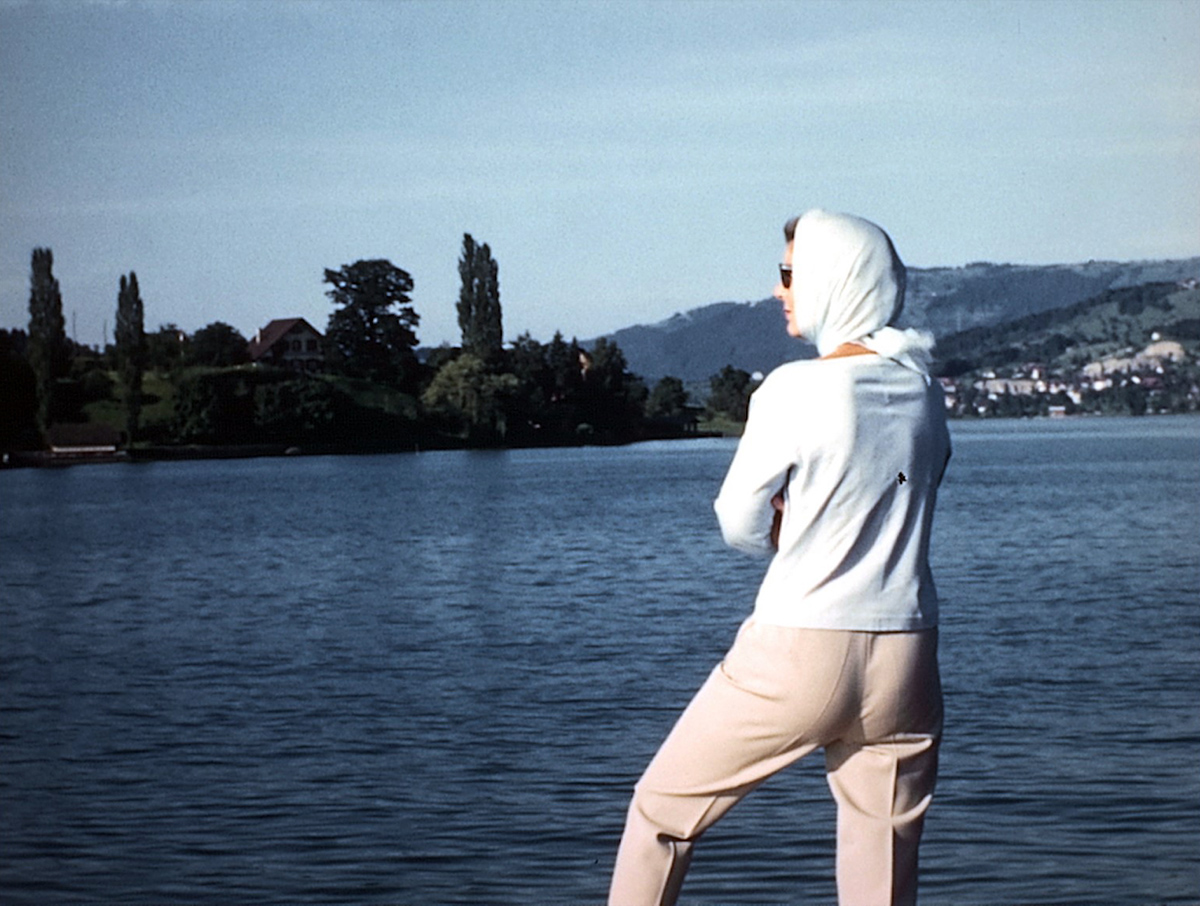
Just as sensory triggers, like the taste of a madeleine for Proust, unlock deeply buried memories and emotions, archival footage weaves sensory stimuli into the fabric of its narrative. It can bring to the surface repressed traumas or forgotten moments, allowing viewers to re-experience the emotional intensity that may have been dormant or obscured by the passage of time.
Old film reels demand an existential engagement with the fragments of what was once lived. In this confrontation, the past is not retrieved as it was but perpetually reimagined, casting its shadow onto the present in ways that are as fluid as they are haunting.
The emotions stirred by these recollections—nostalgia, regret, grief, trauma, fleeting joy—do not arise from the past itself, for the past is irretrievable; rather, they are born from the interplay of what was and what is, a dialectical synthesis that roots us in the present while tethering us to the void of what has been lost.
Old film reels demand an existential engagement with the fragments of what was once lived
To engage with memory is thus to engage with freedom, for in remembering one chooses how to reconfigure the fragments of history into a narrative that speaks to the self. Yet, this freedom is fraught with anguish, for every act of remembrance carries with it the weight of responsibility. The images and emotions that emerge are not merely given; they are willed into being, shaped by the gaze of the present. In this perpetual reconstruction, memory reveals itself not as a mirror of the past but as a generator of meaning, where the self, caught between time’s inexorable flow and the eternity of its choices, continually remakes itself.
Conclusions
The use of home movie footage in contemporary filmmaking highlights the profound impact of memory and the emotional depth involved in revisiting the past. It invites a critical reflection on the limits of historical representation and the fluid and subjective nature of memory. Much like Proust’s madeleine, visual fragments from the past generate recollection and emotional resonance, allowing bygone events and individual lives to resurface in unexpected, transformative ways.
This interplay reflects an archival impulse central to contemporary visual culture, where fragments of the past are resurrected not merely to preserve but to interrogate, subvert, and reinvent. Through the convergence of poetic language, editing techniques, and the recontextualization of personal archives, found footage cinema generates a liminal space between documentary and fiction. Private histories merge with public discourse, the personal becomes political, and filmmaking itself mirrors humanity’s innate desire to rescue, reinterpret, and reimagine time.
Found footage films remind us that the archive is far from a static repository. Instead, it becomes a dynamic medium for revisiting and reimagining the past. By reanimating the fragments of forgotten lives and stories, found footage cinema transforms history into a living, breathing dialogue, offering a lens through which we may better understand the complexities of memory, identity, and the ethical stewardship of our collective past.
BIBLIOGRAPHY
Assmann, J. (2011). Cultural Memory and Early Civilization: Writing, Remembrance, and Political Imagination. Cambridge: Cambridge University Press.
Brainerd, C. J. and Reyna, V. F. (2005). The Science of False Memory. Oxford: Oxford University Press.
Cook, P. (2005). Screening the Past: Memory and Nostalgia in Cinema. New York: Routledge.
Derrida, J. (1995). Archive Fever: A Freudian Impression. Chicago: University of Chicago Press.
Freud, S. (1914). Psychopathology of Everyday Life. London: T. Fisher Unwin.
Huyssen, A. (2003). Present Pasts: Urban Palimpsests and the Politics of Memory. Stanford: Stanford University Press.
Nora, P. (1996). Realms of Memory: Rethinking the French Past. New York: Columbia University Press.
Proust, M. (1992). In Search of Lost Time: Swann’s Way. New York: Random Library.
Proust, M. (2003). The Way by Swann’s. London: Penguin Books.
Renov, M. (1993). Theorizing Documentary. New York: Routledge.
Ricoeur, P. (2004). Memory, History, Forgetting. Chicago: University of Chicago Press.
Ruby, J. (1977). ‘The Image Mirrored: Reflexivity and the Documentary Film,’ in Journal of the University Film Association, vol. 29, v. 4, Fall 1977, pp. 3-12.
Endnotes
- 1. Nora, P., Realms of Memory: Rethinking the French Past. See bibliography.
- 2. Assmann, J., Cultural Memory and Early Civilization: Writing, Remembrance, and Political Imagination. See bibliography.
- 3. Ricoeur, P., Memory, History, Forgetting; Derrida, J., Archive Fever: A Freudian Impression; Huyssen, A. Present Pasts: Urban Palimpsests and the Politics of Memory. See bibliography.
- 4. Renov, M., Theorizing Documentary. See bibliography.
- 5. Brainerd, C. J., Reyna, V. F., The Science of False Memory. See bibliography.