
Suave Mar | Sara N. Santos | 2025
In her first short film, Just Like the Films (2020), Portuguese artist Sara N. Santos assembled a portrait of her late grandfather from fragments of 1940s film noir. By returning to the heroes of her cinephile memories, she brought her departed relative back into the present, following a form of image-based therapy. Suave Mar, completed five years later, moves beyond Hollywood fiction while revisiting several key elements from this liminal work, such as the portrait form and the voiceover, which partly constitute the artist’s found footage poetics.
Suave Mar opens with seaside archival photographs of varying formats, collected notably from the Municipal Archives of Lisbon and the Portuguese Center of Photography in Porto. Early-twentieth-century family portraits, children at play, landscapes, and wandering photographers are revived through a five-part narrative that intertwines the haunting picture of a presumably deceased maternal figure with the story of a lost heterotopia.
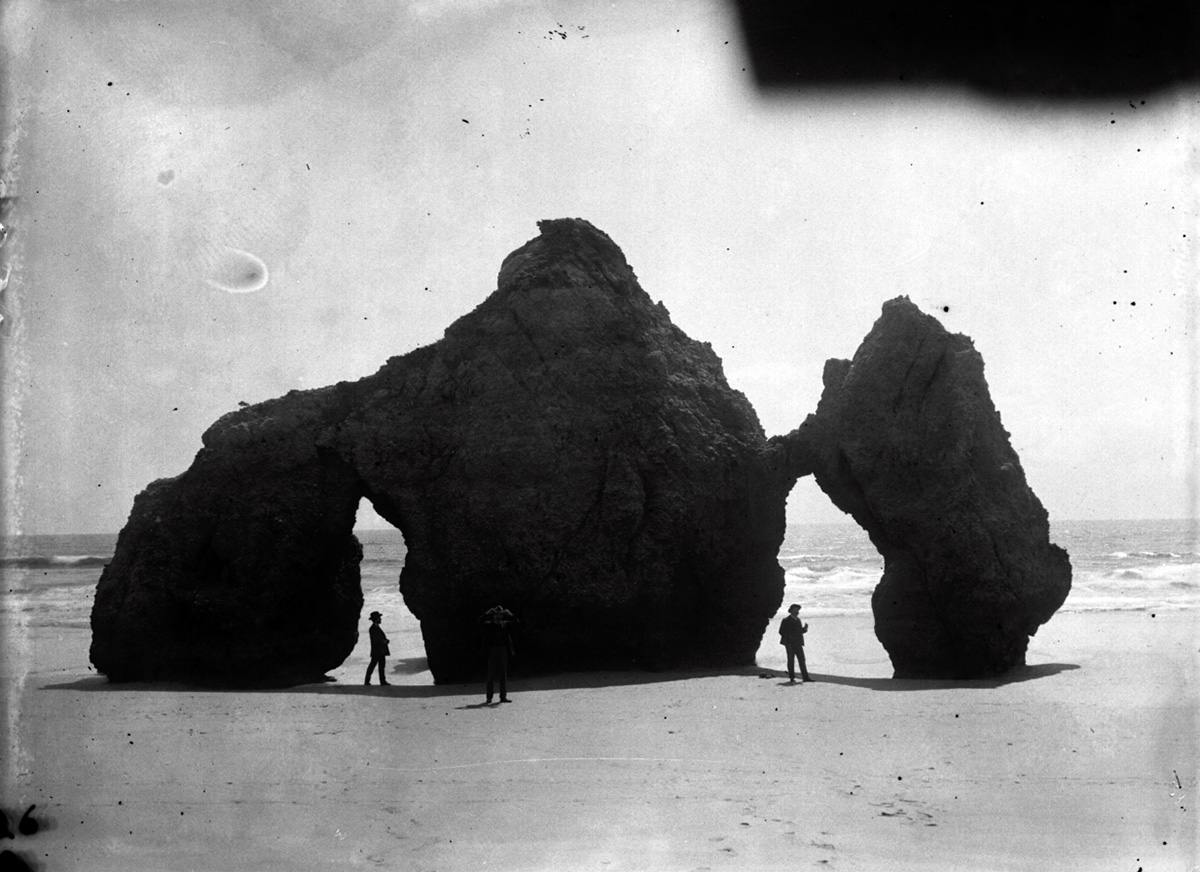
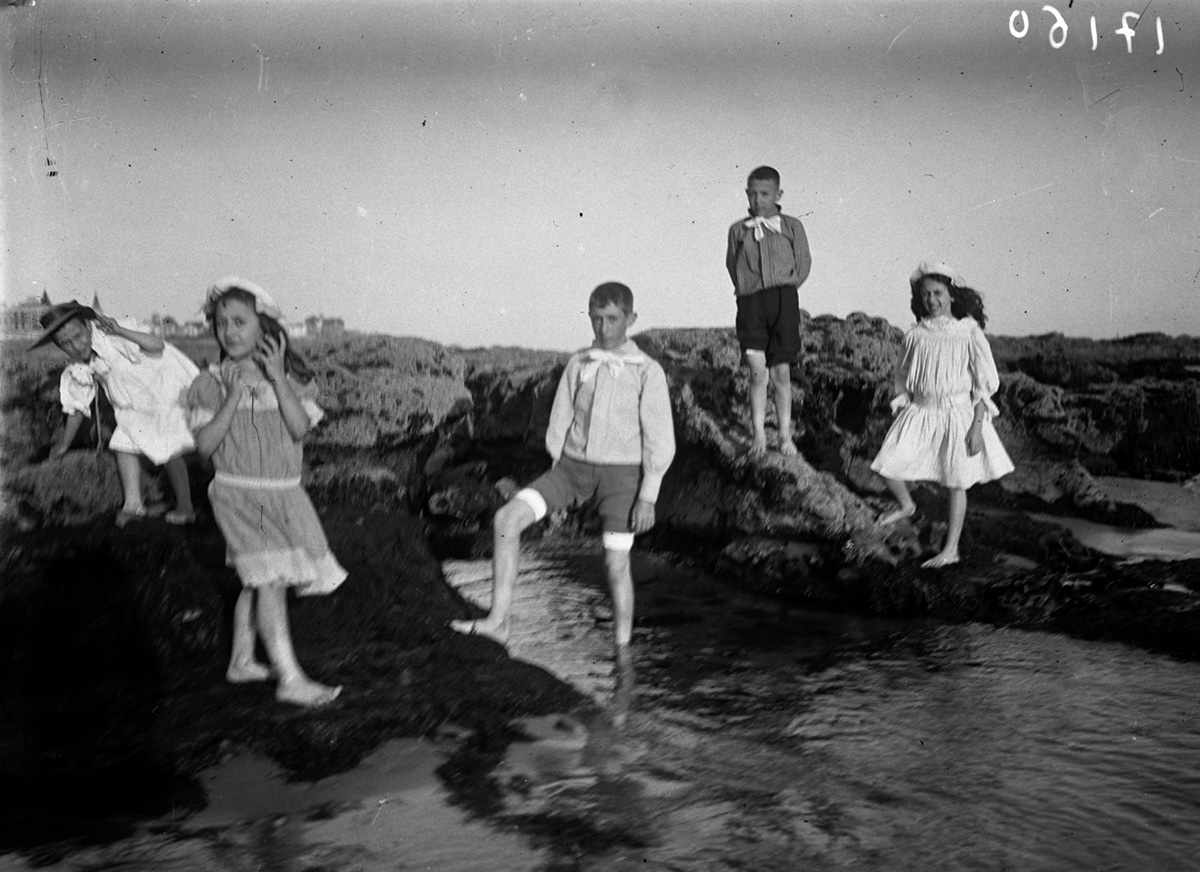
The first section, Archive, sketches the traits of a mother with multiple faces, who appears (or rather, is sought) throughout the selected photographs. The evocation of her habits soon opens into a meditation on photography itself, as the narrator invites us to perceive, in the vacationers’ faces or gestures and in the traces of seaside euphoria, Roland Barthes’ notion of the trace of what-has-been—the ça-a-été that distinctly characterizes the analog medium. Thus, the frozen smiles of these interwoven generations belong to an irretrievably gone past that can only resurface in the futur antérieur.
Yet, successive images gradually conjure an idealized space-time of endless Sundays by the sea where everyone once lived in harmony and good health. The candor radiating from the photographs is heightened by a deliberately blissful sound design, composed of overlapping children’s laughter and the murmur of waves. The second section, Rituals, extends the unfolding of this lost civilization’s archive, about which no names, dates, or precise locations are explicitly mentioned—bathing rituals, family picnics, children (and later adults) burying themselves in the sand echo one another, expressing both exhilaration and an undercurrent of fear.
Decay, the next section of the film, then marks a turning point. Except for the ghostly presence of the photographer, sensed in negative, emptiness begins to invade the frame. Laughter grows more distant, giving greater weight to this futur antérieur inevitably marked by death. While the religious dimension of the Ceremony section seemingly offers a potential remedy to this ongoing decline, the heterotopia reveals its ominous underside, while the untamable nature of the mythical beach comes to light. The once carefree figures gradually move away from the sea, gathering in crowds or carrying bundles, as if seeking to escape an impending catastrophe. The previously joyful seascapes suddenly recall the somber stills of La Jetée (Chris Marker, 1962), from which Santos borrows not only the construction based on still photographs and the male voiceover, but also its central preoccupation: the possibility of a machine capable of resurrecting buried memories.
Underlined by Suave Mar’s final segment, Cinema, cinema itself appears as the sole instrument through which the gentleness of the past can be revived, thanks to its ability to gather and restore the fragments that survive. While the individuals onscreen are initially kept at a respectful distance in the opening images, those portrayed in this concluding section are captured in closer frames. Their looks, once directed toward the horizon or absorbed in joyful activities, are now persistently fixed on the camera. A tacit appeal thus seems to emanate from these figures that urges for the preservation of their traces, for the prolongation of their latent community, and for resistance to the orphaned fate to which they are destined. As if in response to the silence of these insistent gazes, Santos’ excavation of this seaside archive momentarily reanimates the paradise of Suave Mar and its onlookers, extending, toward other shores, the ode to the medium she initiated a few years earlier.