
Another Other | Bex Oluwatoyin Thompson | 2025
What the world does to you—if the world does it to you long enough and effectively enough—you begin to do it to yourself. You become a collaborator, an accomplice of your own murderers.
These words, seen in a series of onscreen titles, open Bex Oluwatoyin Thompson’s found-footage short Another Other, setting the stage for an incisive look at the patterns of control, manipulation, and othering that sustain American institutions of power. The words are taken from a 1971 episode of the PBS show SOUL!, uttered by African American writer James Baldwin to the poet Nikki Giovanni—a meeting between two legends of Black literature that revolved around issues of morality, power, policing, dehumanization, suffering, art, freedom, and race.
That textual component is the first piece of found footage Oluwatoyin Thompson employs in Another Other, but there are two other primary sources. Visually, she recycles imagery from the 1993 Hollywood film Rising Sun, a controversial action blockbuster in which Wesley Snipes plays a police lieutenant. For her purposes, Oluwatoyin Thompson redeploys footage from a scene in which Snipes is interrogated by his (predominantly white) superiors. Aurally, Oluwatoyin Thompson’s soundtrack consists of a television news broadcast of a 2023 hearing of the House Education & Workforce Committee, in which the president of Harvard University, Dr. Claudine Gay (a Black woman), was chastised by the government for supposedly fostering antisemitic protests on campus. (The protests were in fact pro-Palestinian demonstrations that proliferated in fall 2023 as Israel escalated its genocidal campaign against occupied Palestine.)
In its deployment of textual, visual, and aural archival materials, Another Other opens up a complex network of power relations with a dizzying array of related ideas—about identity, moral compromise, distortive ideology, and the like. Such an overwhelming rush of complicated themes is almost too much to cover in the short space of this review—but then again, Oluwatoyin Thompson is able to convey this conceptual firestorm in the span of only nine minutes in Another Other. The utilization of Rising Sun (even for viewers unfamiliar with that film) confronts the loaded legacy of Black police officers in the United States, who collaborate with an institution that upholds white supremacy in order to obtain proximity to power. Other provocative tangents come into play for viewers who are familiar with Rising Sun, a film that exoticizes the Japanese and portrays them as inherently untrustworthy—adding yet another layer of racist othering.
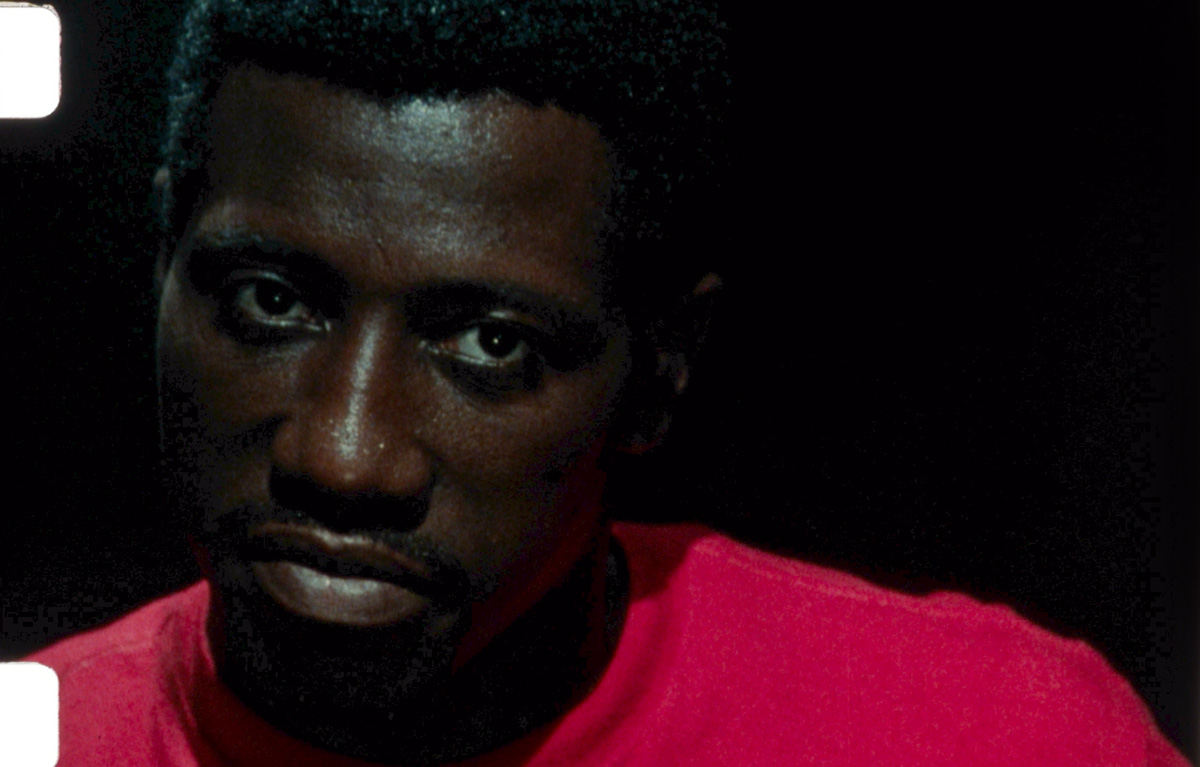
If Snipes’ character willfully colludes with an anti-Black institution in Rising Sun, Another Other suggests that Claudine Gay has similarly collaborated with a racist arm of the superstructure—namely, the U.S. government. Gay—the thirtieth president of Harvard, and its first Black president in its 387-year history—came under fire for (ostensibly) failing to discipline demonstrators who expressed antisemitic sentiments during anti-Israel protests. The hearing that plays on the soundtrack provides a crystallization of the moment when these individuals, institutions, and forces of power clashed before the public eye (and ear). Since Israel has long been a lucrative ally for the United States, Gay is essentially reprimanded for failing to serve her role as supporter of American/Israeli dominance. (One could argue that universities are supposed to be a safe space for dissent from dominant political ideologies, but it should be recognized that academia plays an important role in reifying existing power structures—a fact that’s abundantly clear as the U.S. government threatens to divest funding away from universities it perceives as non-supportive.)
Oluwatoyin Thompson makes Gay’s double consciousness explicit through the use of audio and subtitles. As the questioning of Gay becomes increasingly hostile on the soundtrack, the subtitles at the bottom of the screen deviate from what’s actually being said. For example, when the voice of an interlocutor cattily tells Gay, “I love the lip service, I really do,” the subtitles read, “Good job! You’ve really figured out how to sound just like us. How do you really talk though?” Later, Gay says (in a steely monotone), “Antisemitic rhetoric, when it crosses into conduct that amounts to bullying, harassment, intimidation, that is actionable conduct, and we do take action.” But the subtitles reveal the turbulent thought process that may be going through Gay’s mind: “I followed all your scripts and codes. I rolled heads off necks and delivered them on silver platters. I’ve let you use my skin as detergent for your stained laundry.” With an acerbic sense of humor, Another Other lays bare the complicated forces that might lead Black subjects to become (in the words of Oluwatoyin Thompon’s website) “collaborators with racist and antiblack systems, even as those systems attempt to chew them up and spit them out.”
It’s those systems that are the real targets of Another Other’s appropriately bitter commentary (which Baldwin also expresses in the SOUL! episode mentioned above). The police and the U.S. government are the primary recipients of that condemnation, but the American media is also to blame. Hollywood cinema has often reinforced (and occasionally challenged) the racist ideologies of the dominant status quo, which is neatly demonstrated by Rising Sun. Meanwhile, the mainstream media (like the news channel C-SPAN, from which Oluwatoyin Thompson lifted the audio of the government hearing) often echoes the (Islamophobic, white-supremacist) sentiments of those in power, painting protests and dissent as un-American. Oluwatoyin Thompson emphasizes the culpability of the media by foregrounding the material elements of the footage she uses: the visual components from Rising Sun feature sprocket holes and celluloid jittering through a faulty projector, while the audio features loud clicks (as of a recorder turning off and on) and an abrasive buzzing to make us firmly aware that this is all a mediated construct. With something as complicated as the dissemination of cultural ideology—which is so pervasive that even those from marginalized communities willingly collaborate with forces against their best interests—the convincing distortions of the media are required.
Another Other exhibits the thematic complexities and formal experimentation that define found-footage cinema at its most potent. Through well-chosen sources and a careful calibration of sound, image, and text, the film suggests complex ideas that defy easy encapsulation. For an American viewer like me, it’s also an incredibly cathartic experience. At a time of extreme political divisiveness—when dissent is propagandized as a terrorist act, when any critique of the state of Israel is labeled antisemitic, and when forces of law and power should be viewed as instruments of a violent regime—it’s more crucial than ever to deconstruct the systems that convey ideology in often covert ways. Another Other exposes those systems with a ferocious insight both infuriating and liberating.