
Archiveology: Walter Benjamin and Archival Film Practices – Prologue
Archiveology refers to the reuse, recycling, appropriation, and borrowing of archival material that filmmakers have been doing for decades. It is not a genre of filmmaking as much as a practice that appears in many formats, styles, and modes. The goal of this book is to explore the practice of archiveology as it traverses experimental, documentary, and new media platforms. The film archive is no longer simply a place where films are preserved and stored but has been transformed, expanded, and rethought as an “image bank” from which collective memories can be retrieved. The archive as a mode of transmission offers a unique means of displaying and accessing historical memory, with significant implications for the ways that we imagine cultural history.
The films discussed in this book are examples of archiveology as a media art practice. In fact, the networking and remediation of audiovisual materials extends well beyond experimental works and includes the proliferation of pedagogical and poetic video essays. It also includes the hundreds and thousands of YouTube homages, supercuts, and remixes made by amateurs, alongside those made by film scholars, and mainstream film industry–sponsored trailers, tributes, and other montages made in recognition of film historical knowledge. The potential of film history in its cut-up form remains an open possibility, as well as a wounding and trauma to the integrity of narrative cinema. Walter Benjamin’s cultural theory is significantly oriented toward the avant-garde as the corollary to the implicit dangers of the society of the spectacle, and the various compilation films, essay films, and experimental media that I discuss in this book are chosen precisely because they highlight the dualism and necessary ambiguity of archiveology as a language of media culture.
In ‘The Author as Producer,’ Benjamin demanded that writers take up photography, but not simply to document.1 He calls on the activist intellectual to work on “the means of production,” which is to say, the technologies of production, in order to turn spectators into collaborators. In the revolutionary language of a Marxist-inflected activism, Benjamin describes the writer as an “engineer” who adapts the apparatus, even if it is only a “mediating” role in the revolutionary struggle against capitalism— which in 1934 he fully aligns with fascism and its “spiritual” qualities.2 If Benjamin’s rhetoric seems overblown, he nevertheless provides a more engaged model than that of Guy Debord, even if he shares with Debord an insistence on dismantling the society of the spectacle.
The emphasis on Walter Benjamin is admittedly a choice to sideline other media theorists who also have much to contribute to the significance and dynamics of archiveology. In this book I indeed draw on many key thinkers, including Michel Foucault and Jacques Derrida, Jacques Rancière, Giorgio Agamben, and Vilèm Flusser, not to mention many cogent Benjamin scholars such as Miriam Hansen, Susan Buck-Morss, Margaret Cohen, and Christine Buci-Glucksmann, and many other film and media scholars as well. However, Walter Benjamin remains the central figure because a second aim of this project is to argue that archiveology as a cultural practice is a crucial point of convergence of many of Benjamin’s central ideas, and that it makes his contribution to media theory “attain to legibility.”
Benjamin is a challenging theorist, because he himself adopted the style of surrealist poetics at a certain point in his career. He felt that the surrealists had missed an opportunity for a revolutionary practice that he aimed to rectify with his own experimental study of Paris, The Arcades Project. Archiveology is not a term derived from Benjamin, whose wordplay did not include neologisms. He did, however, develop an archive-based critical method, and thought a great deal about archaeology as a metaphor for the transience and sedimentation of cultural memory. As Samuel Weber explains, Benjamin tended to form nouns from verbs so as to give them “abilities,” and to make them potent, constructive, and dynamic: “Benjamin’s writing practice advocates the reinscribing of established terms so that they part company with themselves—which is to say, with their previous identities. It is by virtue of such a movement of parting-with that words recover the ability to name, which is never reducible to any identifiable semantic content, least of all to that of a proper noun.”3 The term legibility is an example of this tendency in Benjamin; likewise, the pliable conception of language implicit in Weber’s description underscores the mutability of archiveology as a language of the audiovisual archive.
Although his famous essay ‘The Work of Art in the Age of Its Technical Reproducibility’ has been a cornerstone of film studies scholarship since the 1960s, it has only been since the 1990s that Benjamin’s larger corpus of writing has been translated into English, providing more historical context for that essay and more access to his diverse program of theory and criticism. Benjamin was deeply caught up in the political and aesthetic turbulence of Europe between the wars, and his concept of “experience” came from a life that was lived fully, and lived in a state of perpetual dislocation. His own death looms over his vast corpus of writing—much of it unpublished during his lifetime—as testimony to the catastrophe of history and the failed promise of modernity that motivated much of his work.
Critics, scholars, and filmmakers frequently cite Benjamin in the context of found-footage filmmaking because so many of his key concepts, such as allegory, quotation, “refuse,” dialectical images, ruins, and the optical unconscious, seem particularly appropriate to the practice. In this book I hope to bring these ideas into something more than a collection of sound bites. Benjamin is eminently quotable, but film scholars have rarely stopped to try to bring it all together. By drawing on his early work on language and German tragic drama, as well as One-Way Street, The Arcades Project, and many of the essays on film and culture, my aim is to make Benjamin’s diverse comments on images and history converge in light of archival film practices. As he himself argues about images, “they attain to legibility only at a particular moment in time.”4 This is the time when image culture is in transition, when analog image technologies are taking on the aura of something vanishing, and when we might be able to see “some beauty” in that vanishing.
Given the vast spectrum of activities and cultural practices that could potentially be subsumed under the rubric of archiveology, it may be necessary to justify the role of artists’ moving image practices. The question of art is actually one of the key problematics at the heart of Benjamin’s project. His implicit answer to the question of art in the age of its “technical reproducibility” (a.k.a. “mechanical reproduction”) is that art needs to be engaged and, moreover, that criticism is obliged to “lift the mask of ‘pure art’ and show that there is no neutral ground for art.”5 Benjamin’s own critical writing on Franz Kafka, Marcel Proust, Charles Baudelaire, and many other writers is consistently reflexive, engaged with the texts in such a way that their work is “illuminated” as a meeting of reader and author. Benjamin was less concerned with the judgment of works or the originality of authorship than with the ways that texts accumulated extra baggage in their afterlives: “the exegeses, the ideas, the admiration and enthusiasm of previous generations have become indissolubly part of the works themselves.”6 He described an obsessive focus on “the new and topical” as “lethal.”7
In 1930 Benjamin advocated for a mode of criticism that would “consist entirely of quotations,”8 which is where we are today with the burgeoning form of the video essay, in which critics construct their analysis of films using extracts from the films themselves. Art and criticism are closely allied in Benjamin’s thought as instruments of social and cultural critique. He cared not to evaluate work or to praise it but to situate work within the shifting tides of modernity. Artists are particularly well situated to negotiate the treacherous ambiguities of Benjamin’s conception of culture in which the ideological and the utopian are intricately connected. His rhetoric of “blasting open,” of “awakening,” of the “monodological” and the dialectical is premised on a recognition that the only way to subvert or challenge the world of images that we inhabit is from within that world. Thus the tropes of porosity and the techniques of montage and collecting belong to an art of remix, recycling, and revisiting the past from the very particular vantage point of the present. For Benjamin, “now time” is a dynamic conception of the present moment as a break from the past, but a moment that might correspond to the image of a future as yet unrealized.
If the magical and utopian elements of Benjamin’s messianic philosophy have proved troublesome to some, many artists and scholars have been drawn to his work precisely because of its imperative challenge to reason. Archiveology as a creative practice is a means of harnessing the energy of Benjamin’s critical method in the context of an ever-expanding image bank. Moreover, the conception of a language at the heart of this practice is based in critical method rather than a “scientific method” such as semiotics. Benjamin’s notion of allegory is argued by way of examples drawn from literary sources, and likewise the method of this book is to draw from examples of moving image culture.
By way of introduction, it may also be necessary to set aside several false expectations that readers may have of this book. It is not, for example, a book about the history of found-footage filmmaking, although archiveology is definitely an outgrowth of that practice. A more experimental practice of found-footage filmmaking continues to thrive in which media artists work with more “manipulative” strategies on more personal levels, and often draw on personal as well as public archives.9 Archiveology has not entirely subsumed found footage or displaced it but offers another way of thinking about that practice as a critical cultural form. Nor is this a book about archival practices, or the ongoing challenges of preserving media history, or the missions and mandates of archivists. Archiveology is a creative engagement with the institutions, individuals, and materials of the media archive, but my focus is on the images themselves, which are what are actually at stake in the growing discourse around media archives.
The convergence of research and representation, searching and exhibiting that are all part of archiveology tends to align it with both curating and criticism. Many of the works discussed in this book might be described as video essays, but that is not the focus either. Instead, this corpus is best considered within the context of the avant-garde—which is not exactly the same avant-garde as that which existed in Benjamin’s day. In the era of the art star and the gallery film, media artists can no longer always remain outside the realm of capital, and the balance of ideology and utopianism is increasingly destabilized.
If the artwork is not autonomous but embedded in an image world of which it is a part, whose resources it destroys and constructs again, then it is not entirely surprising that some artists are making money from it. However, we need to keep in mind that the radical potential of film, for Benjamin, lay in its status as a collective practice. Thus, this book returns repeatedly to Hollywood, classical cinema, and the movie stars with their cultish auras. Video projections in destination museums often borrow the spectacular qualities of classical cinema not only to détourne mainstream cinema but to attract audiences.10 That is just how powerful classical cinema, even in fragmentary form, can be. Nevertheless, it is also true that a committed avant-garde also exists, and archiveology continues to provide valuable tools for many forms of media practice, not all of which can be adequately accounted for in this book.
Film and media archives of many different varieties exist globally, many of them accessible in bootleg form and many still to be discovered. Many more remain due to overexuberant gatekeepers, lack of resources, neglect, or physical decay. Archiveology is above all a means of returning to the images of the past that were produced to entertain, or produced for more serious purposes of documentary recording, and reviewing them for new ways of making history come alive in new forms. Archiveology as defined here is not about personal memories but collective memories, the images produced to tell stories or to record public events. Another road not taken, but equally important, is that of the personal archive and the work made from home movies. Countless examples exist in which traces of identity are collected from image cultures both private and public and reconstructed into new work in which the maker finds herself within the fissures and contradictions between and among images.
Celebrity biographies of personalities such as Amy Winehouse, Marlon Brando, Ingrid Bergman, and Kurt Cobain can be constructed entirely from photographic materials. These are people who grew up in front of cameras and were often undone by them as well. But this is not a history of archiveology or the essay film. If it were, it would have to include key figures such as Chris Marker and Harun Farocki, who make only brief appearances. Marker and Farocki have their own strong methods of essayistic archiveology that certainly converge with Benjamin’s cultural theory but, at the same time, seem to run parallel to it. Their relative absence from this project is due to a desire to resist auteurism and focus on somewhat lesser-known figures whose work collectively outlines the features of archiveology—a focus on works that tread a more precarious path through the dangers of image culture to reclaim its secrets.
As an art of editing, searching, compiling, and organizing, archiveology highlights the affinities of filmmaking with women’s work. Esfir Shub is unquestionably the first archiveologist, and there are undoubtedly many more women whose work remains invisible.11 Although Benjamin himself cannot be considered a feminist, his work has been instrumental to feminist film scholarship for a variety of reasons. His commitment to the politics of the everyday, to the flexibility of counterreadings and afterlives of texts and images, and to the ideals of social transformation and social justice have all been taken up by feminist filmmakers and film scholars. Barbara Hammer, Abigail Child, Leslie Thornton, Peggy Ahwesh, Sue Friedrich, and many others have developed impressive oeuvres of found-footage filmmaking. In the final chapter I will take up the topic of “awakening” from the gendered corpus of film history by means of archiveology. Although the book contains analyses of films of only two women, Nicole Védrès and Rania Stephan, the emphasis on gesture and on detail in archiveology necessarily shifts the focus of experimental media from masculinist oversight and vision to filmmaking as craft.
Although this book is concerned with many films made before 2000, the theorization of archiveology has only become possible after the millennium. Shortly after the completion of my book Experimental Ethnography in the late 1990s, I wrote a short half-page “definition” of archiveology for a ‘Lexicon 20th Century A.D.’ for the journal Public. I began by defining archiveology as “the technique of storing and accessing the vaults of cultural memory. Not to be confused with remembering.”12 Since then, many things have become more clear, including the fact that archiveology belongs to a lexicon of the twenty-first century, and that it is a mode of creative practice that draws on the techniques of storing and accessing, but it is also much more. This book is an attempt to define the term again and give it more substance. Archiveology is a mode of moving image art, one that is particularly well suited to a reviewing and reimagining of the twentieth century. I also wrote in 2000 that “remembering” is “the recovery of fragments of the past that have become dismembered from the body of the present,” which remains more pertinent than another somewhat na.ve claim: my conception of history as being like a computer memory. Walter Benjamin’s thought can be glimpsed even in my initial foray into archiveology, and I am even more convinced that his theorization of nonlinear historiography remains the most pertinent to this inquiry precisely because his passionate practice of thinking through images seems to be increasingly relevant to the appropriation arts of the twenty-first century.
In Experimental Ethnography, I wrote about found-footage filmmaking in terms of apocalypse culture. In 1999 it seemed as if this mode of film practice was preoccupied with “the end of history,” and the promise that Benjamin held out for cinema had failed to be realized. Nearly two decades later, as archival film practices have become more prevalent in mainstream culture and in experimental media, I am more optimistic about the cultural role of audiovisual appropriation. One key change has been a shift in theory and practice to the recognition of the research function implicit in archival film practices. “Found footage” links the mode to surrealist practices of accident and recontextualization but negates the extensive searching that often sustains the practice. Recognition of the search function highlights the role of the moving image archive and its transformation in digital culture.
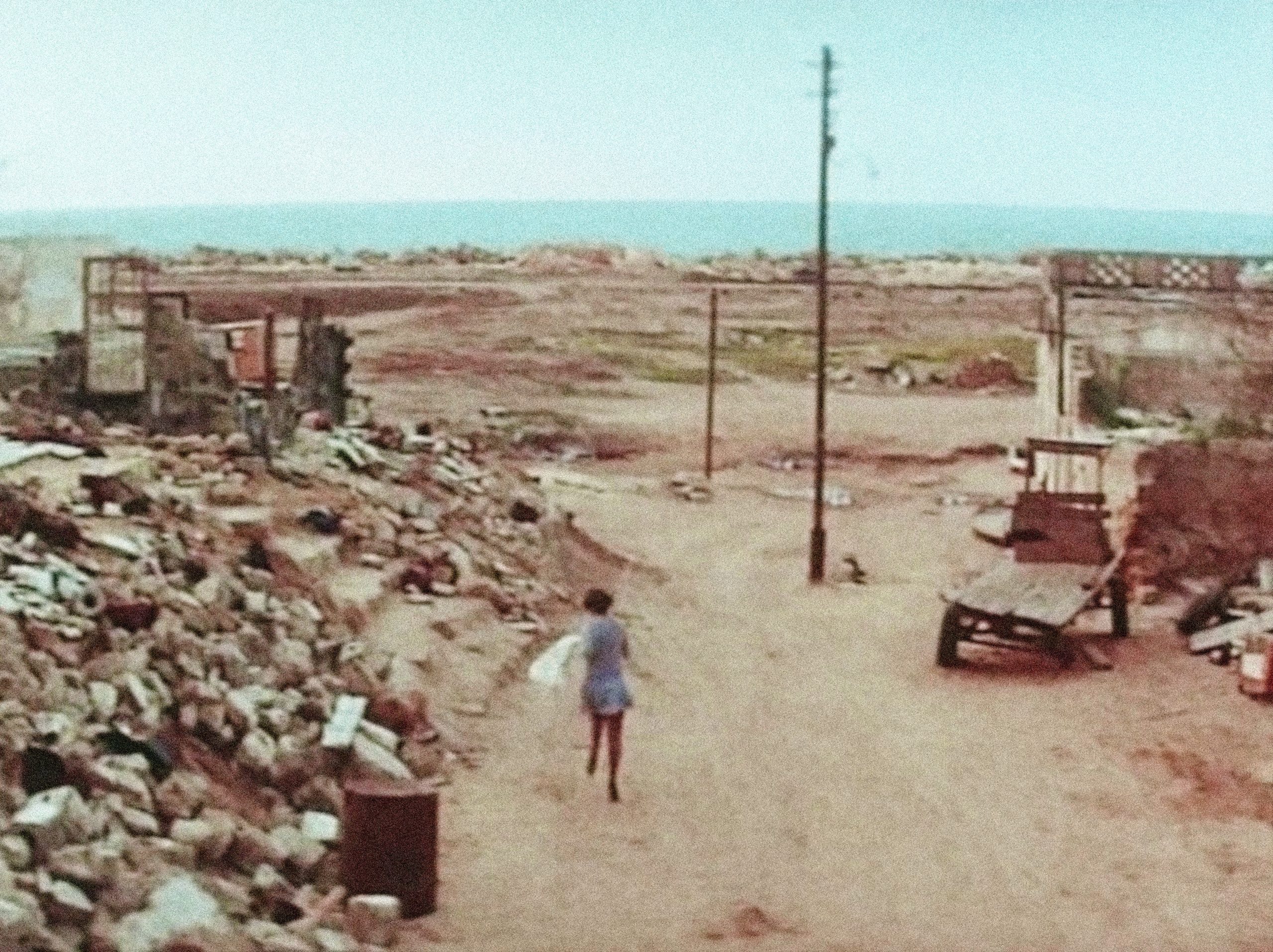
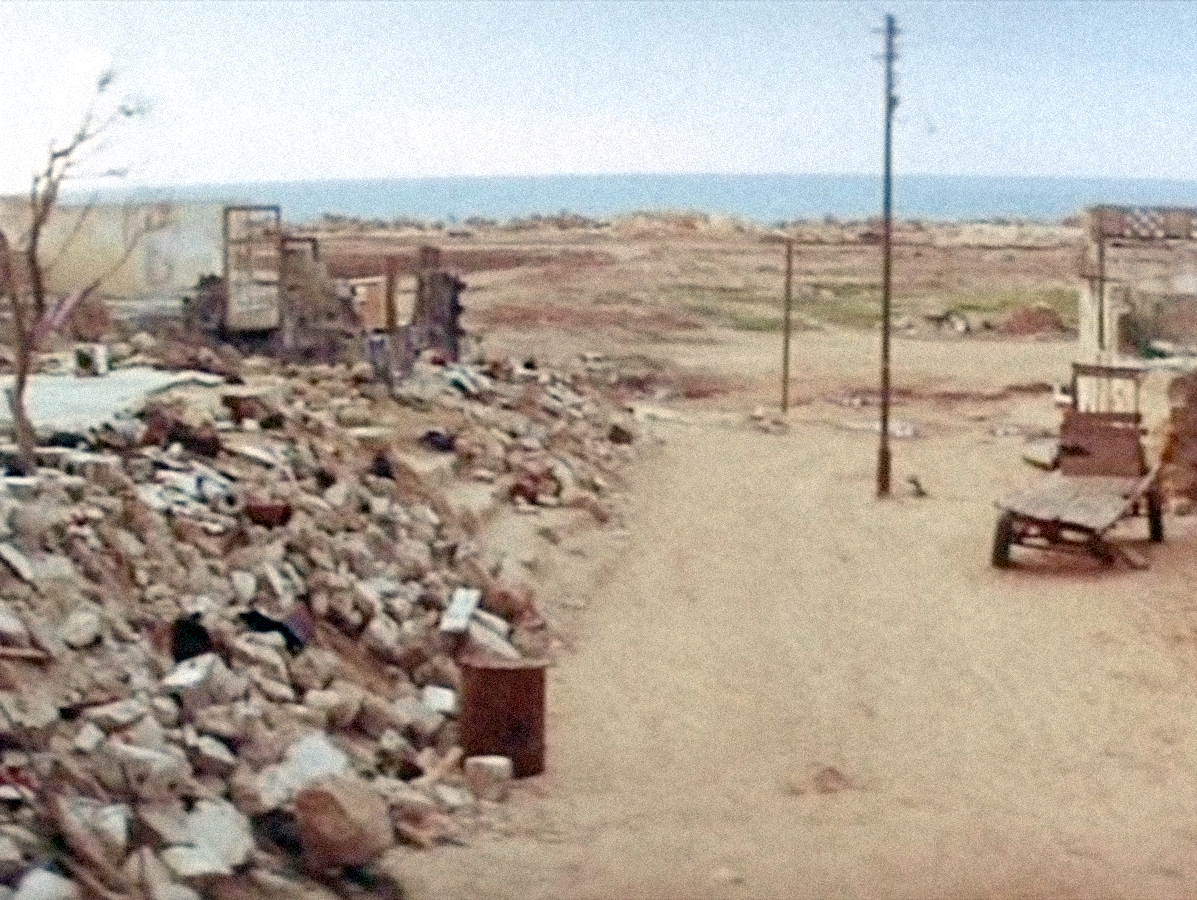
Given the dearth of non-Western media in this book, I would like to conclude this preface with a single film that draws on the archives of global media and serves as a good opening example of archiveology. Kamal Aljafari’s Recollection (2015) is made from Israeli and American feature films shot in Jaffa from the 1960s to the 1990s. Using digital effects, Aljafari has removed the principal actors from the locations, leaving behind only the streets and buildings, many of them ruined by years of conflict. He lingers on the figures on the periphery, zooming into close-ups of Palestinian extras that he finally, at the end of the film, suggests may be relatives and acquaintances. The images are rendered inauthentic due to his magic tricks but are then given a new reality through his retrospective assignation of names and characters. Recollection is a film haunted by ghosts, memories, and a history of violence and occupation. The ruined city echoes with an emptiness that the viewer is compelled to fill with imagination and a recognition that the city is much older than the past century. Aljafari projects himself onto the archival materials in a destructive, poetic, and very personal way. Digital tools have only amplified the means by which images can be “played” with and yet a film like Recollection points toward the potential even of destroyed and ruined archives to be remade as new ways of knowing the world.
If, for Benjamin, Eug.ne Atget photographed Paris as if it were the scene of a crime,13 Aljafari’s depiction of Jaffa renders the entire city a site of a political, historical, and humanitarian crime. His method is precisely a matter of “possessing the object in close-up” and “illuminating the detail,” as Benjamin describes Atget’s practice.14 The “new way of seeing” that Benjamin identifies in Atget’s photography of the early twentieth century has been renewed once again by Aljafari, whose process starts with refilming the Israeli films with a digital camera from the screen; his pans and zooms traverse and examine the cityscapes as media. His exploration of historical displacement is a literal recovery of the city as a space of domiciliation, memory, and imagination.
Archiveology is a practice of collecting images and compiling them in new and surprising ways, performed by artists and independent filmmakers, working in a variety of audiovisual media. It is an essayistic form, insofar as filmmakers are taking up previously used material as the basis of a film language. Appropriation filmmaking is an engaged practice, in which authorship is separated from vision, and yet a poetics of collage and a creative use of sound make this very much an art practice. The author is not only a producer; she is also a builder and a destroyer, constructing new work out of old and making new ways of knowing out of the traces of past experiences. Images and sounds are recordings that engage the senses, documents that are mysterious and secretive until their energies are released in flashes of recognition. Moving image artists are those who create these sparks, which only occur in the presence of the viewer.
* Catherine Russell, ‘Prologue,’ in Archiveology, pp. 1-9. Copyright 2018, Duke University Press. All rights reserved. Republished by permission of the copyright holder, and the Publisher. www.dukeupress.edu.
BIBLIOGRAPHY
Balsom, Erika (2013). ‘Around The Clock: Museum and Market,’ Framework, 54, no. 2, pp. 177–91.
Benjamin, Walter (1999). The Arcades Project. Translated by Howard Eiland and Kevin McLaughlin. Cambridge, MA: Harvard University Press.
Benjamin, Walter (1999). Selected Writings. Vol. 2, 1927–1934. Edited by Michael J. Jennings, Howard Eiland, and Gary Smith. Translated by Jonathan Livingstone et al. Cambridge, MA: Harvard University Press, 1999.
Benjamin, Walter (2002). Selected Writings. Vol. 3, 1935–1938. Edited by Howard Eiland and Michael W. Jennings. Translated by Edmund Jephcott et al. Cambridge, MA: Harvard University Press.
Dall’Asta, Monica (2011). ‘Beyond the Image in Benjamin and Bazin: The Aura of the Event,’ in Dudley Andrew (ed.) Opening Bazin: Postwar Film Theory and Its Afterlife. New York: Oxford University Press. Pp. 57–65.
Weber, Samuel (2008). Benjamin’s -abilities. Cambridge, MA: Harvard University Press.
Endnotes
- 1. Benjamin, ‘The Author as Producer,’ in Selected Writings, vol. 2, p. 775.
- 2. Benjamin, ‘The Author as Producer,’ p. 780.
- 3. Weber, Benjamin’s -abilities, p. 10.
- 4. Benjamin, The Arcades Project, p. 462.
- 5. Benjamin, ‘Program for Literary Criticism,’ in Selected Writings, vol. 2, p. 292.
- 6. Benjamin, ‘The First Form of Criticism That Refuses to Judge,’ in Selected Writings, vol. 2, p. 373.
- 7. Benjamin, ‘The First Form of Criticism That Refuses to Judge,’ p. 373.
- 8. Benjamin, ‘Program for Literary Criticism,’ p. 290.
- 9. Evidence of the flourishing of found-footage filmmaking can be found in a new journal devoted to found footage that has published three issues to date, Found Footage Magazine, in English and Spanish.
- 10. Balsom, Exhibiting Cinema, pp. 107–48.
- 11. Shub is the director of The Fall of the Romanov Dynasty (1927). At least one more or less “invisible” woman is Gustav Deutsch’s partner, or, as he puts it, “companion in life and in art,” Hanna Schimek. For a good analysis of “Myriam” Borsoutsky, who worked extensively with many of the French directors of the 1940s through the 1960s, see Dall’Asta, ‘Looking for Myriam.’
- 12. Russell, ‘Archiveology,’ p. 22.
- 13. Benjamin, ‘The Work of Art in the Age of Its Technological Reproducibility,’ second version, in Selected Writings, vol. 3, p. 108.
- 14. Benjamin, ‘Little History of Photography,’ in Selected Writings, vol. 2, pp. 518–19.