
My Armenian Phantoms | Tamara Stepanyan | 2025
Directed by Armenian-born filmmaker Tamara Stepanyan, My Armenian Phantoms unfolds at the meeting point of the personal and the historical, serving as a medium for conversing with ghosts. It is a fantasmatic journey into the past in which she revisits the many facets of her homeland—the ones portrayed through dozens of movies shot in Armenia over time, and the equally meaningful images of private life captured in her home movies. In doing so, Stepanyan mourns her father by laboriously rebuilding a sense of belonging and genealogy through cinema. She thus invites spectators to bridge temporal and emotional ruptures, to trace continuity within fragmentation.
The film’s title sets its tone as a work inhabited by phantoms. And the ghosts in My Armenian Phantoms are many. Rather than exorcising them, Stepanyan beckons them to remain onscreen, creating a cinematic séance between the living and the dead, the remembered, and the erased. These ghosts include her father, actor Vigen Stepanyan, who appears in many of the fragments taken from Armenian films; her ancestors, whose lives were shaped by displacement and genocide; and the larger specter of Armenian cinema with its lost reels, suppressed voices, and forgotten folks behind the scenes, who held magic at their fingertips.
Stepanyan’s use of archival footage reinforces the idea that cinema itself is haunted. Every reel is a repository of vanished time, a record of gestures and faces. My Armenian Phantoms assembles the fragments, allowing images from different eras to coexist in a cinematic palimpsest within which Stepanyan traces the evolution of Armenian cinema from Hamo Beknazarian’s silent films to the politically coded works of the 1960s and 1970s. She approaches this vast archive not as documentation but as an emotional echo, at the heart of which lies the figure of the father.
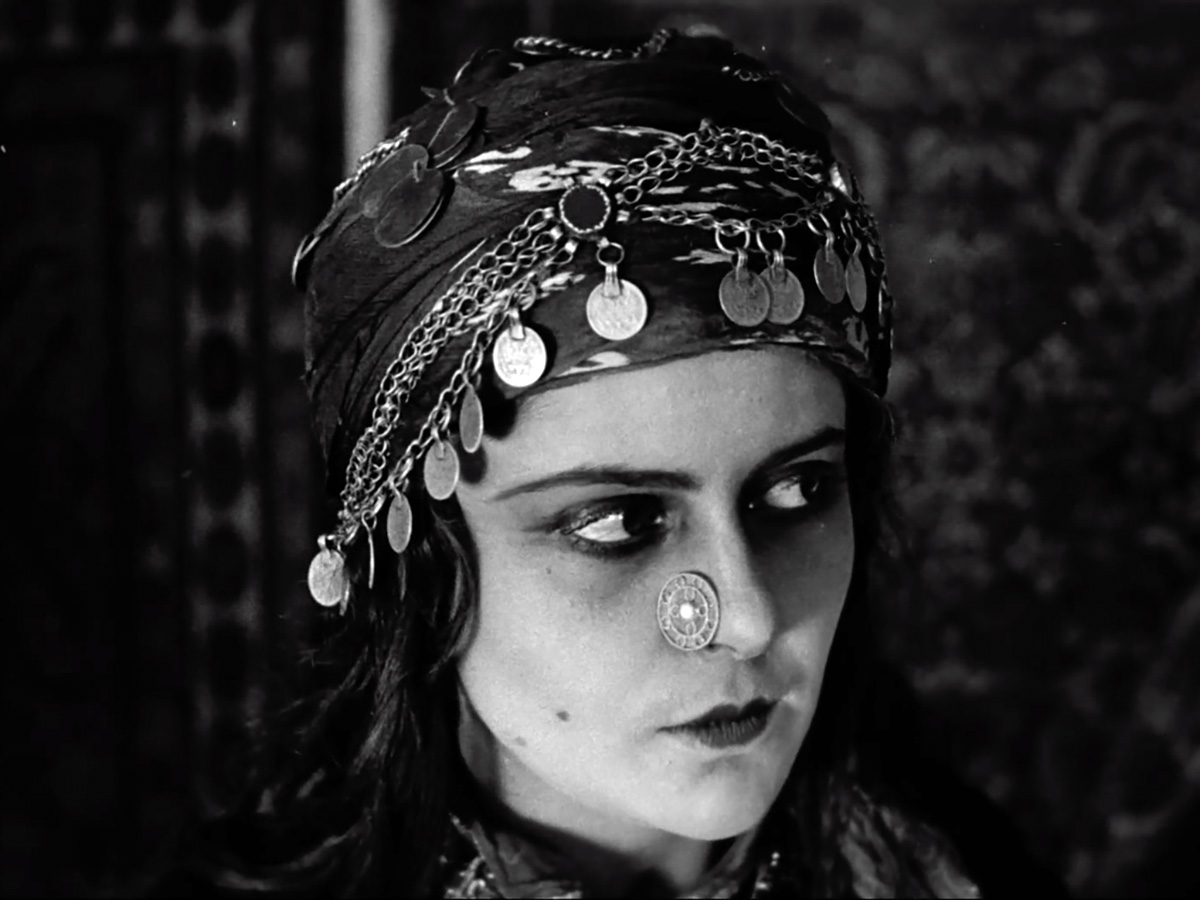
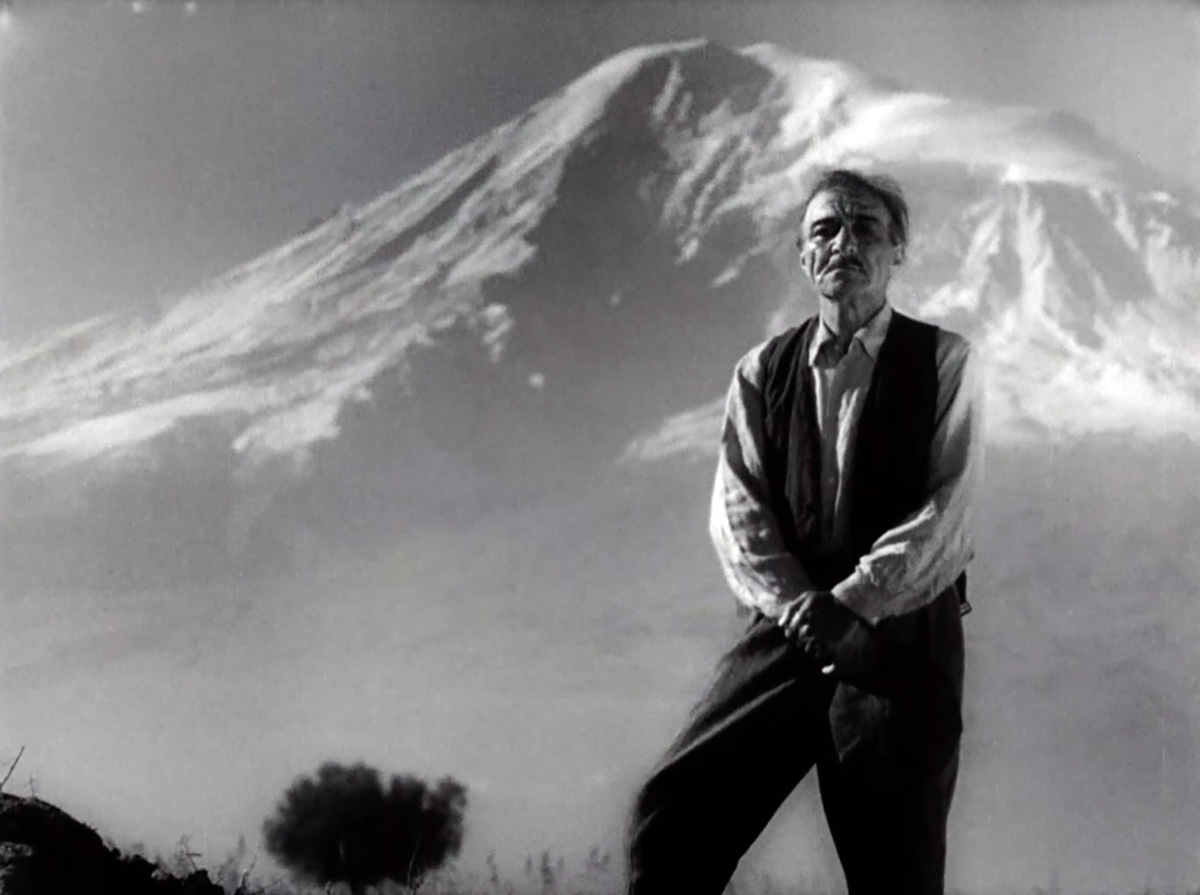
In Armenian, the word hayrenik—“fatherland”—binds the notion of home to paternal lineage. The father, in this sense, embodies both familial loss and national displacement. Through this dual lens, the film contemplates how mourning for a person can merge with mourning for a country, a culture, or a past. But mourning, too, is celebration, it is transmission, it is community. It is in this way that My Armenian Phantoms becomes an act of community-making, and by gathering what was scattered, the film transforms loss into relation. The ghosts that inhabit it are not simply mourned; they are invited into dialogue and celebration within and outside the film.
As an Armenian of the diaspora, raised outside my ancestral lands and with little relation to the republic, Armenia has often existed for me as an idea rather than a place, a geography reconciled through language, stories, and scattered photographs. Its cinema, born within Soviet structures, seemed to belong to another world than mine—one that spoke in a different visual and emotional language. Yet, as Stepanyan’s film unfolds, what is comforting was how familiar it all feels, and how many of those thoughts it appeases. It is in my own projections that I find Stepanyan’s search to be for a sense of belonging that survives mobility and change, suggesting that we may exist not in geography but in temporality, in the fleeting space of an image.
To live with ghosts is not sorrow, but recognition, so the film is both elegy and affirmation, and by engaging with the spectral, it transforms mourning into creation. It does not seek to fix the past but to remain in conversation with it, acknowledging that remembrance is itself a living act. Through this approach, Stepanyan renders her film truly a medium in many senses of the word, capable of hosting ghosts: a meditation on how we inherit, how we remember, and how, through the language of cinema, we continue to speak with those who are no longer here, and to speak to each other beyond time and space, and the ruptures of our people.